When planning our journey we decided to walk some lengths of the legendary Nakasendo trail. This was the route of the Samurais, pilgrims, and occasional travelers crossing the country. The two legs of the journey will take us from Magoma to Tsumago 7.7 kilometers and a second leg of 3.5 kilometres from Tsumago to Nagizo, which on paper looked doable. From there a train to Matsumoto to complete the crossing of the Kaso Valley and the Japanese central alps.
Alas, the reality of carrying a small rucksack and the exhaustion of many days took a toll in my mind and reality started merging with the recent reading of the adventures and misadventures of Don Quijote (by Miguel de Cervantes). The novel is about an old man who read so many chivalry books that he believed he was a knight. It is a book about reinventing oneself, a story about following your dreams and ideals, and it’s also about friendship and lots of humor.
How would it feel to be a samurai? Like a Japanese warrior, I could be a knight bound by honor and loyalty, engaged in quests and adventures of bravery and courage. Dressed in old robes, a makeshift helmet, and a mind full of Japanese novels and books, we started the steep and long climb. The altitude and the tiredness began to play tricks,
what do we see ahead?
A big monster of then thousand arms, water running through its menacing eyes, dripping cruelty in liquid lashes. I try to fight it, but it throws me sideways!
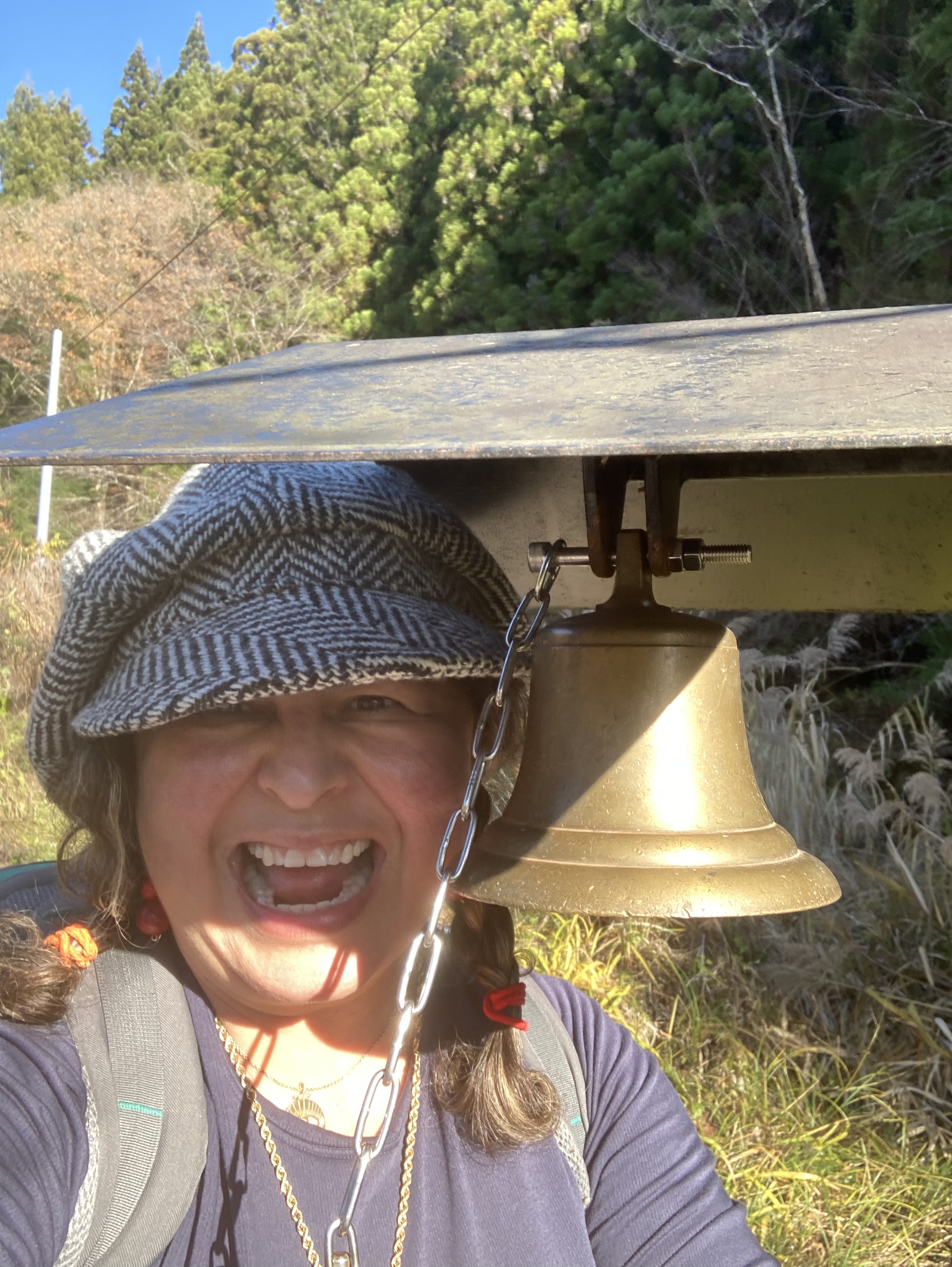
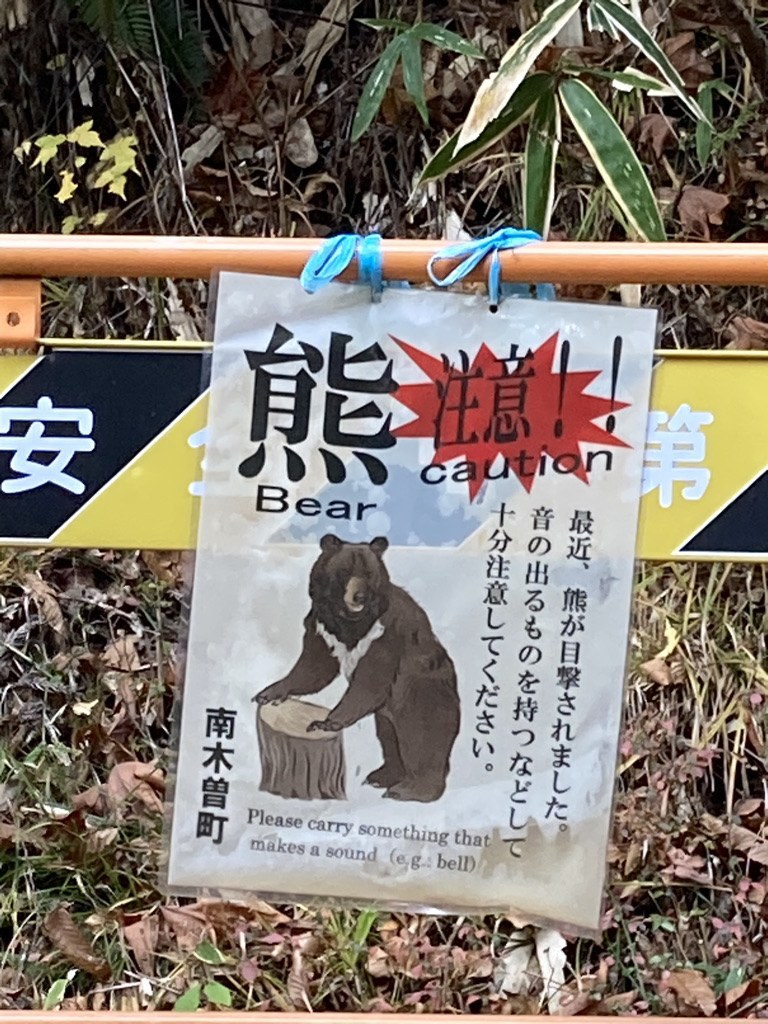
The path continues up the mountain, and we are advised to ring a bell to alert bears. In the last few years, bears are coming down to the cities to get some food. I rang the bell with all my might but it only attracts the furry beasts. Charles starts singing my favorite lullaby song: The Bears’ Picnic, but I am afraid is sending the wrong signals. I get a Coca-Cola from my rucksack and imagine I’m in one of those Christmas ads where an intrepid hiker meets a bear: the encounter is tense, the beast is thirsty for blood… the hiker offers the bear her bottle of Coca-Cola, the sound of the bubbles take over the soundtrack and after a deep growl, the bear drinks it in one go and respond with a big burp. The hiker smiles and the credits read: “Coca Cola the language of friendship.” In reality, the hiker does not stand a chance and the scene is deleted.
Don Quijote tells Sancho about a famous elixir, a recipe given to him by a magician that can cure all ailments in the world. When Don Quijote is wounded in one of his many scaramouches Sancho begs him to teach him how to prepare the elixir. Unfortunately the recipe goes wrong and both spend the night in the woods with a bad tummy. We went on climbing until a brief detour and now it’s a bit down the hill. The landscape of pines, cypresses, bamboo groves, mighty waterfalls, and meandering soothe my troubled mind. My husband -or Sancho carries my mochila and tríes to keep me out of danger. Almost midway we are welcome to a Japanese inn in the middle of nowhere. A sign offering free tea, restrooms, and water from the mountain springs. It’s time to rest and take stock. A couple of walkers join us. We are clearly the eldest couple in the trail so far. But at least we are seeing more humans than bears!
Going down the hill is easier and my spirits lift. I remember a greeting in Japanese and decide to use it with every person I met:. Genki desu ka? Which literally means “Are you cheerful?”. It’s a strange question when you are going up the hill, but the effect is rather extraordinary. Japanese folks smile and respond cheerfully. Sancho tried to greet people with the same formula but it backfired. I explained to my loyal squire the ways of the samurai, the honor and the glory, the bravery and the integrity. And that the greeting is indeed a secret code only used amongst knights or samurais. This part of the country is a preserved area of natural beauty.
In the old days of Shinto, mount Ontake was worshiped, and there was a revival in the Edo period, alongside the establishments of post towns in the route. The power of the mountains is real and we stop at several Shrines to pay our respect. As instructed by Maki (our guide in Tokyo) you shall bow twice in front of the shrine and clap twice too… the spirit of the mountain is everywhere so you have to make your Presence known.
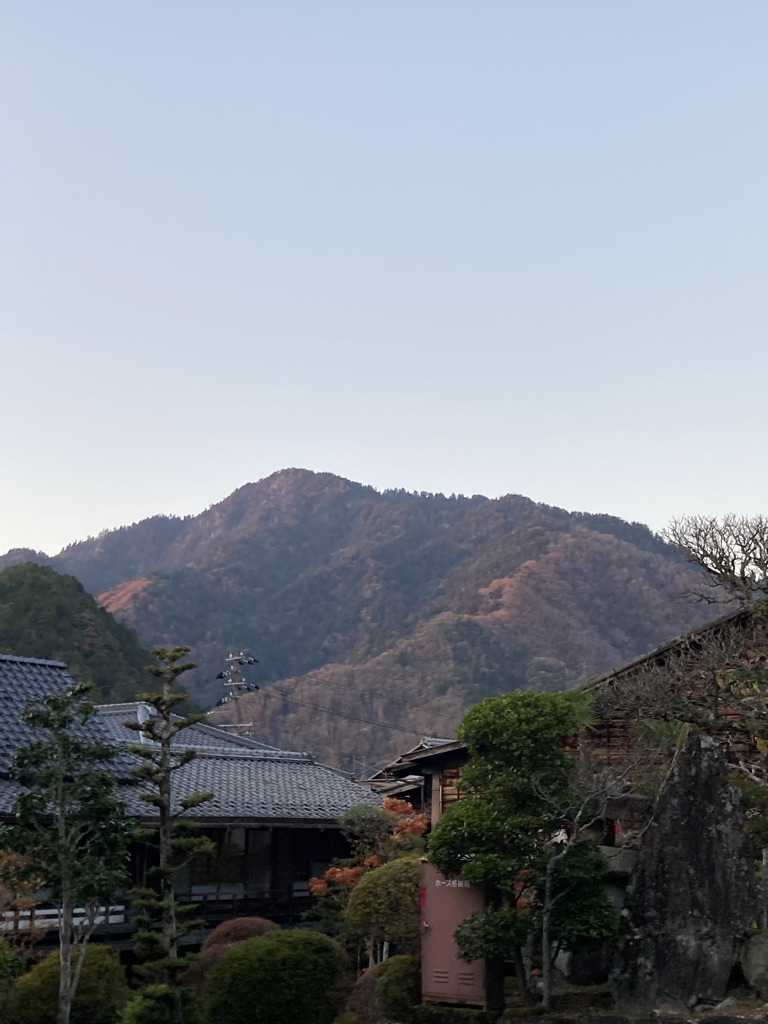
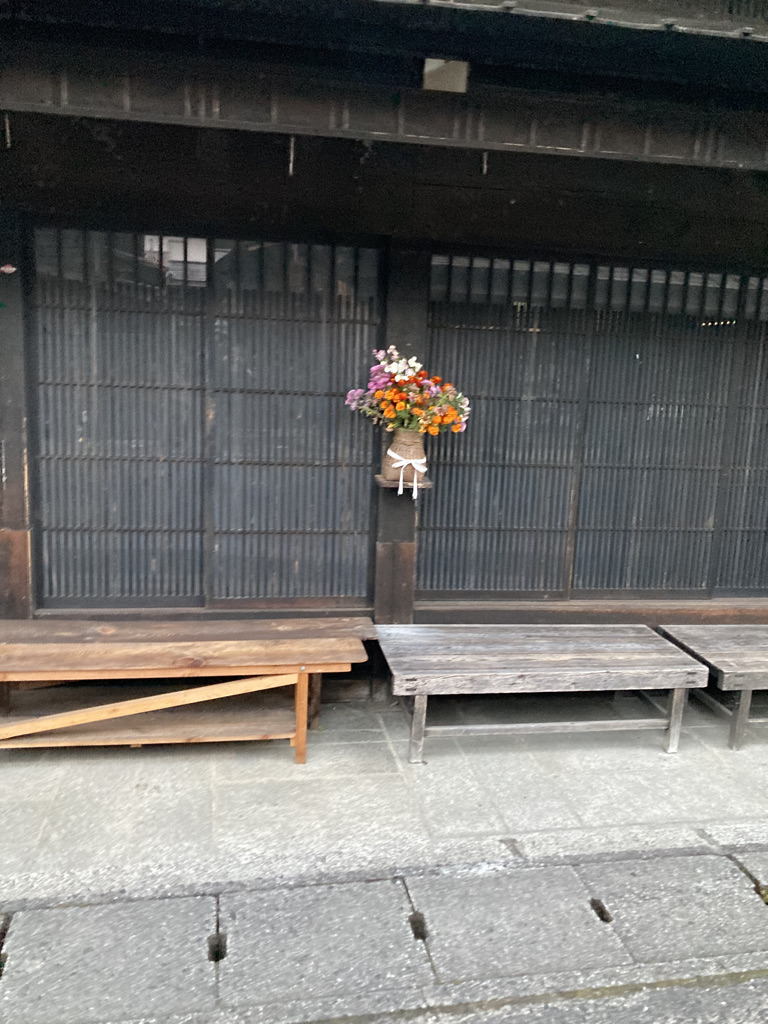
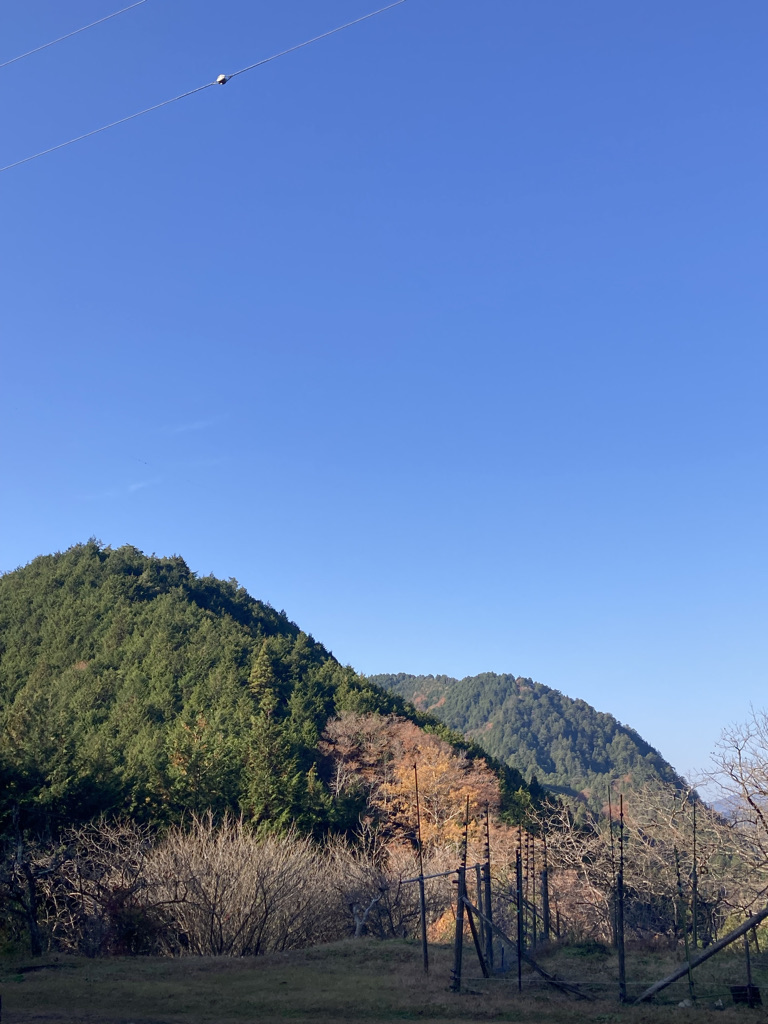
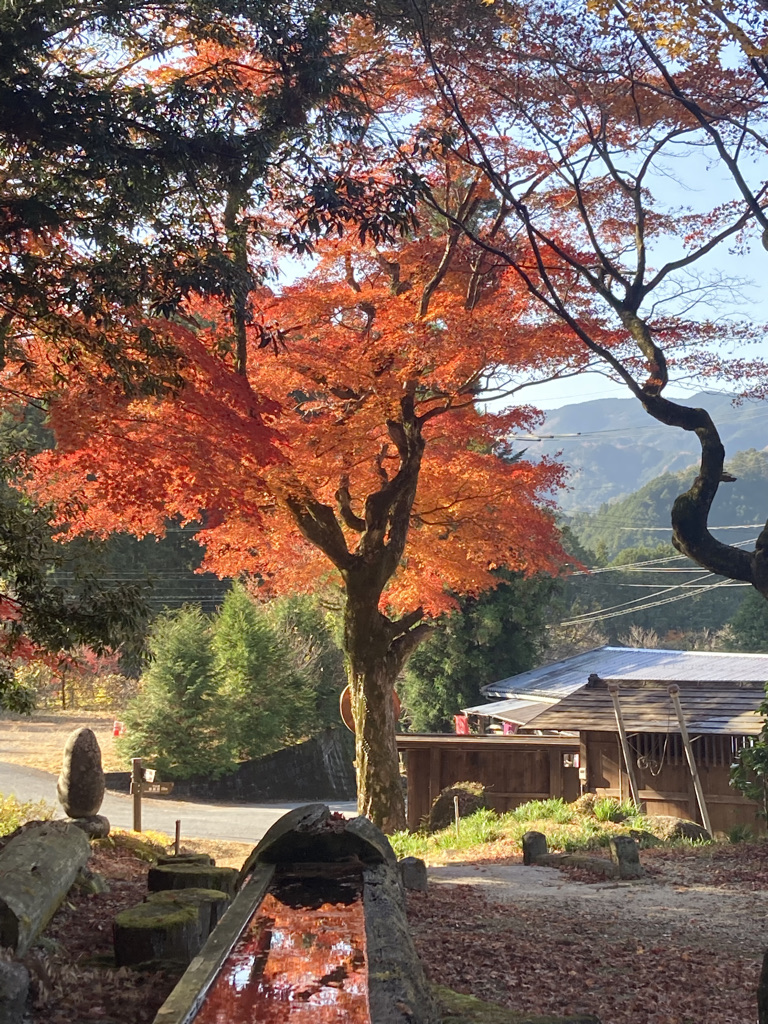
Dressed in the golden colours of the autumn, the crimson, and the evergreens, the mountain opens its entrails to us. It’s getting darker and my feet drag across the leafy paths. This is a real forest bathing, a shinrin-yoku at the heart Of the Japanese Alps When our energies are almost extinguished we spotted the post town of Tsumago down the hill. It’s a welcome sight! The town vibrates with the steps of old travelers, the wooden houses, and signs selling handcrafts and goods. The light is fading and we get to our accommodation just before dark. In Don Quijote, the inns or ventas play a crucial role in the story. This is where travelers meet, stories are shared and misunderstanding occurs. Our inn has seven rooms, but only four are Occupied. It’s very basic, a space with tatamis and the futons ready to be displayed.
The innkeeper said the dinner would be at 18:00 upstairs. We are accommodated on the floor in chairs and short tables. The menu includes the usual staples, rice, miso soup, pickles, and local delicacies; rainbow trout and a pink-coloured meat that turns out to be horse meat. Sancho refused to eat it but I gave it a go. It is not really nice. We are also offered Some snacks of crickets that actually are very tasty! The other guests are two ladies from Singapore, an Australian woman traveling on her own, And a couple of film producers from Los Angeles, sitting next to us. This is their second time in Japan, they were part of the crew filming the Blue 101 documentary on Netflix, trying to find out the secret of longevity in certain parts of the world. Apart from a good diet the real factor is being part of a community and having a purpose: it is again this idea of ikigai, a reason to be and to belong.
We are knackered and my feet are killing me. I wonder how I will survive the next leg of the trail and invoke the powers of samurais and courageous walkers of ancient times. My dreams jumped between the many books I’ve read preceding this journey: I am in a jazz bar with Haruki Murakami, and end up walking through the golden pavilion in Kyoto with Yukio Mishima. I collected some books from the library of Michiko Aoyama in Tokyo. I wonder what happened with Toru Watanabe and why the song Norwegian Wood brought tears to his eyes. Then a cat starts talking to me, his name is Kafka. He is in love with Hello Kitty but she does not like his posts. I wake up in the middle of the night, Sancho placidly snores.
I look through the window, the crescent moon soon becomes full and I am granted a wish… The following morning the sun shines through the mountains. In the distance, I can see the snow peaks of the Japanese Alps. I feel restored and we start our walk after the hefty breakfast. The path meanders through little villages and pockets of green. The cypresses survived the building craze of the Edo period. The rule was strict: “One tree one person, one branch per arm.”
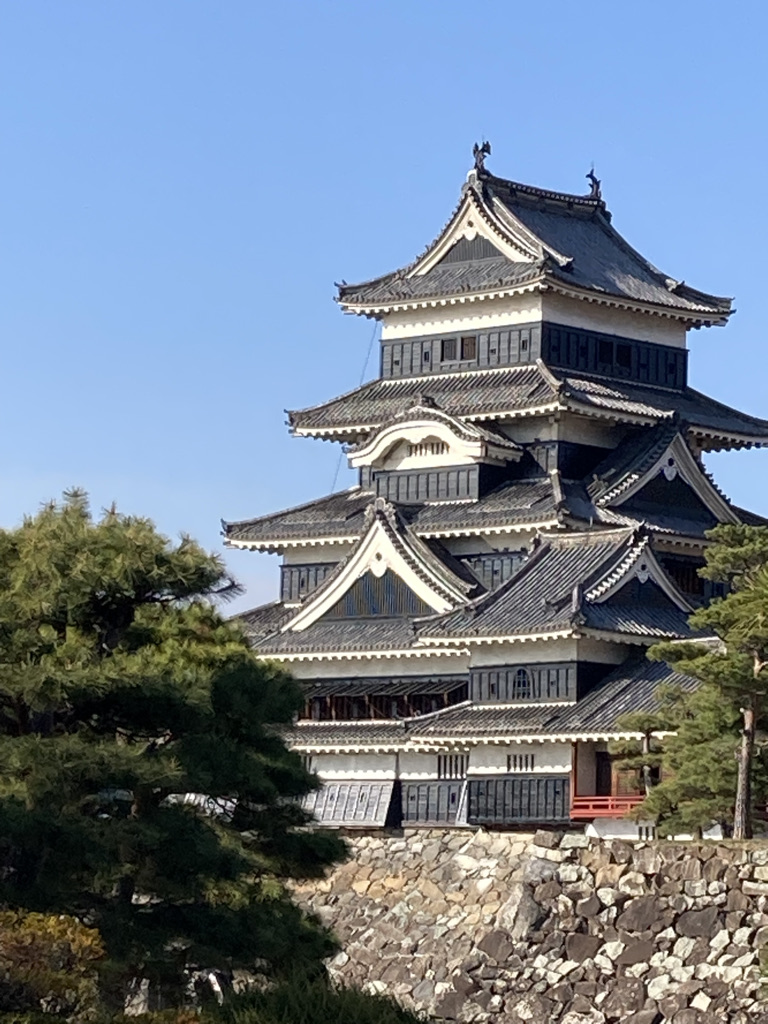
We walk for over one hour and we get to Nagiso station. We have time for a coffee and a view of the oldest suspended bridge in Japan over the Kiso River. Poets and artists revived the fame Of the Nakasendo trail, by praising its charms and alpine beauty. Sancho and Don Quijote wait for the train to Matsumoto to visit the legendary castle, one of the few original castles in the land of the rising sun.
We are tired and the swaying train makes me a bit sick. “Are we there yet?” … “just a bit more little bear”, responds Sancho.

 Bonito Living
Leave a comment