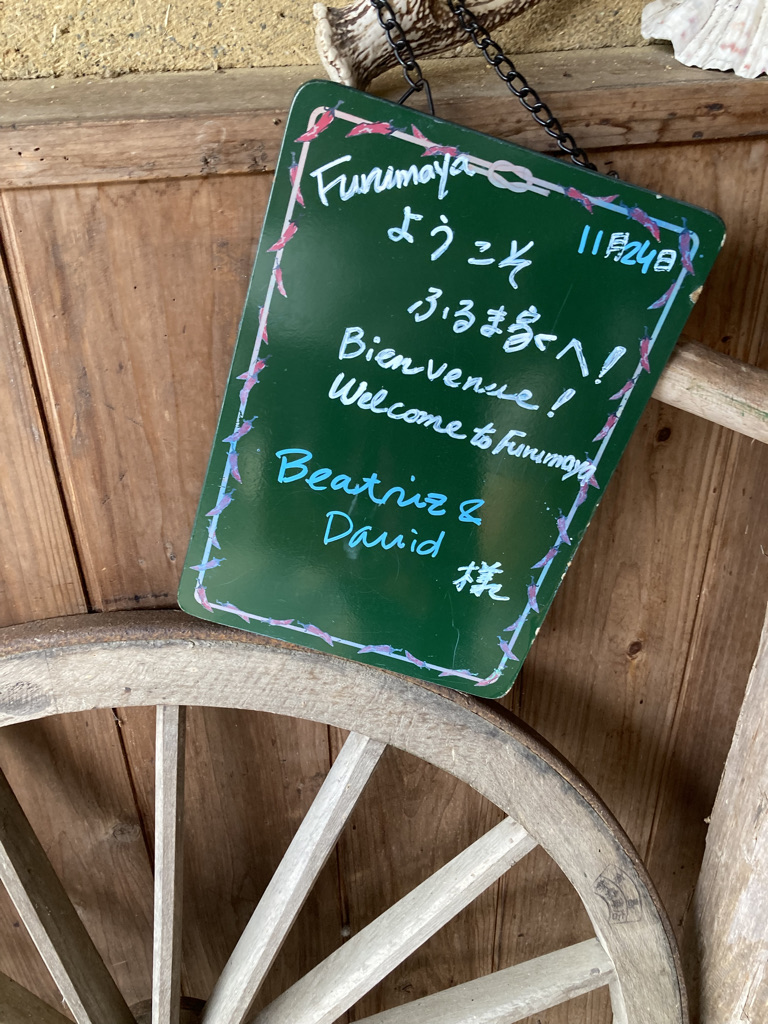
After the frenetic days in Kyoto, our bodies claimed some rest and peace, and we headed north of the city toward the town of Ayabe in the Kamo Valley. Our host, Sayaka from Furuyama Farmhouse is waiting for us and we almost literally feel like falling on her lap. This leg of the journey is about enjoying the famous Kansai hospitality and exquisite sustainable food of the fertile valley. This is an oasis amid the mountains. The farmhouse retains its Japanese identity while catering to more modern comforts. Sayaka, her husband Nicolas, and their 7-year-old son Theo have created a retreat for the exhausted traveler, with nice food, beautiful landscapes, and a fluent conversation, that makes a change to the “lost In translation” sensation of the last days!
In front of the fire, I start relaxing, dozing on and off while trying to make sense of the intensity of this journey. Nicolas comes from time to time to check on us, add more wood, and smile. Japan has welcomed us with so much hospitality and care, revealing its secrets, and opening its magic and profound spirituality. In mystical hospitality, this journey has allowed us to live many lives in such a short space of time: The urban modernity of workers in Tokyo, and the vibe of younger professionals running across the metropolis. We have been inspired by the purifying rituals of onsen (Japanese bathing) and the exquisite pleasures of kaiseki (Japanese haute cuisine) in Izu Kogen. We have experienced the healing powers of kintsugi and wabi sabi and we have had a glimpse of the profound wisdom of Shintoism and Buddhism in Kyoto. We have been monks bathing in a river, pleasure seekers in the floating world, and pilgrims of aesthetic devotion.
At the farm I pick a book from the shelves: it’s titled “Norwegian Wood”, the first novel I read by Haruki Murakami, one of my favorite Japanese writers. It tells the story of Toru Watanabe and his failed romance with Naiko. They walk through Tokyo talking and remembering the tragic death of their common friend Kazuki from their hometown. Their escape to Tokyo is the opportunity to leave that pain in the past. But the wound has cut deep and Naiko struggles with her mental health. Then, after an odd romantic evening, she disappears finding refuge in a sanatorium in the north of Kyoto. Toru visits her in a health retreat in the north of Kyoto, a remote place for convalescing not totally dissimilar to where we are. In her absence, Toru has made friends with Midori, who has taught herself to cook following w nice book of Kansei rural food, the specialty of our host Sayaka.
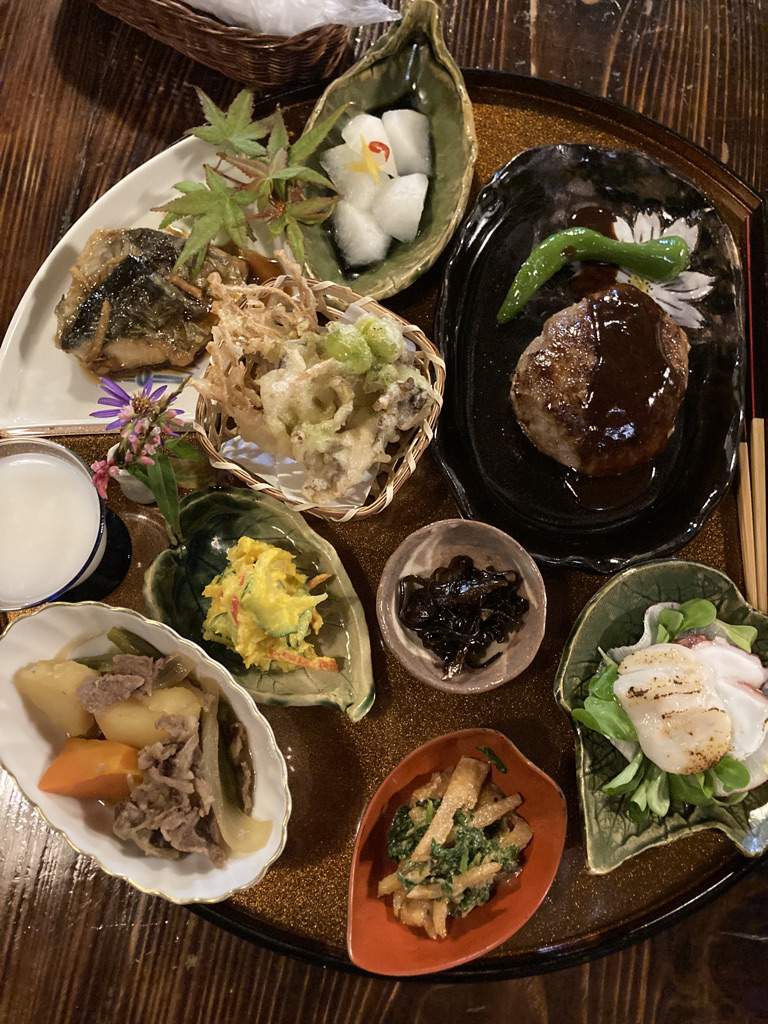
Throughout our stay, we feasted on exquisite food, all from local suppliers, including rice from their own paddy field, cooked with love by Sagoya in her expansive kitchen. She discovered her ikigai; her purpose in life while enjoying cooking for friends. She is an extroverted person, fluent in English, and passionate about sustainable food. She left her job in the corporate world and bought this farmhouse in 2010 to transform it into a touristic destination. Her purpose linked with her passion is her ikigai, one of those Japanese ideas that have become popular in the Western world. I wonder about my own ikigai… and although I think I know the answer I am not totally sure. It is something related to our superpowers, but it is also a way of being in the world, belonging to a community, and realising our personal talents. I guess it’s a matter of trying and listening to our joyful moments…
For a couple of days, we do nothing more than eating, sleeping, and resting. I play with young Theo, and I also snooze and catch up with my drawing and writing. My mind expands with the immensity of the landscape, the changing colors of the mountains, and the slow pace of the farm.
In the delicate melody of hospitality both host and guest play their tunes, a conversation in which our souls transform: as a guest, I absorb and appreciate every single detail of the house and the host attention to detail. Their care for us, the discretion of their presence. We react to each other and we transform in the process. It’s like tending an improvised garden: we care for the seeds of friendship we plant and we receive the harvest of care from our hosts, attending to the rituals and the house customs. In the Japanese house, the threshold suggests a small bow and we remove our shoes. You enter in an attitude of respect and purity.
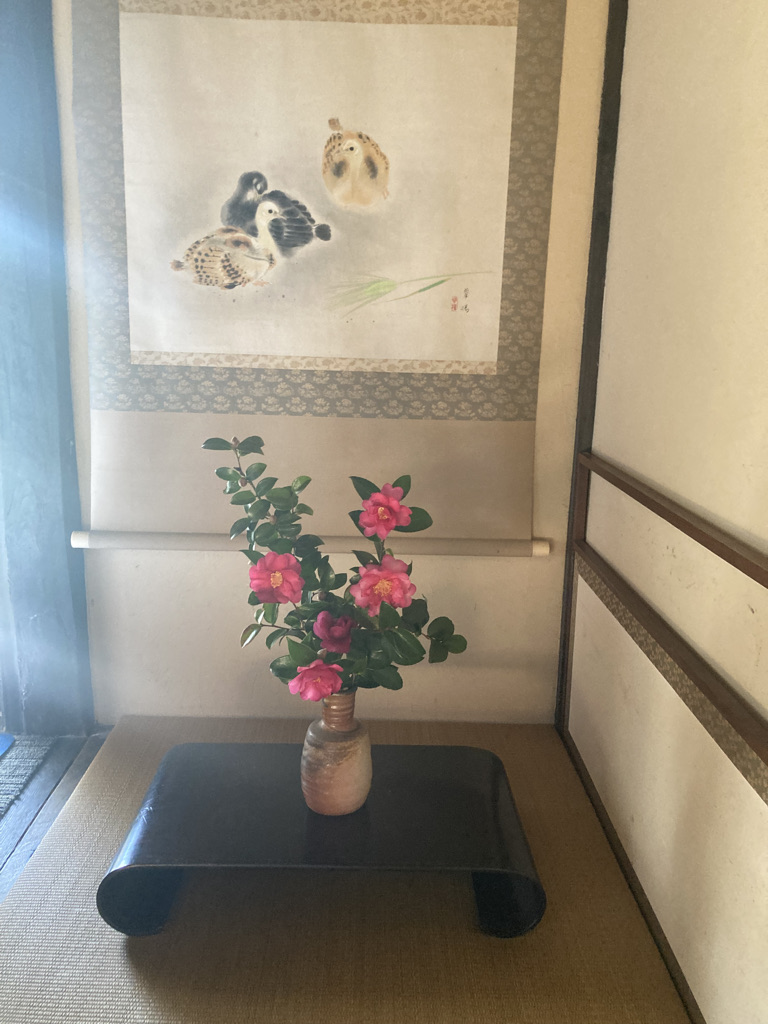
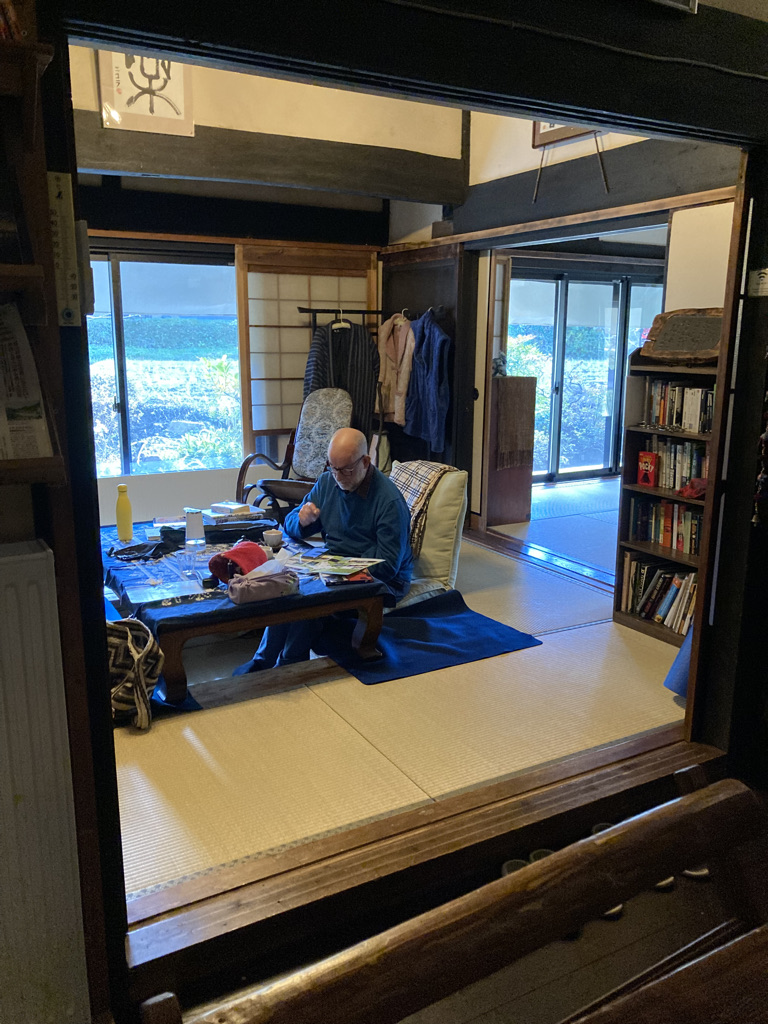
The space welcomes you expansive and sparse, the immaculate and plush tatami, the low-level furniture, and the soft light playing with the gradations of the paper screens. It all invites reflection, silence, and calm. Your body and spirit receive those gifts as a balm, the familiarity of a loved house, the fire gently breathing warmth. You treat all of these with the utmost respect and gratitude; and you become your better self, you listen and respond like in a delicate dance: intimate, affective and compassionate.
I feel surprised by the intensity of the bonds with our hosts, the spontaneous friendship with Maki our guide In Tokyo, the connection with our kintsugi mentors, the depth of connections with fellow travelers… it’s all enhanced by the imminent sense of the transience, the realisation of meeting wonderful people for the first and perhaps last time.
The Japanese call it Ichigo Ichie translated as “one time, one meeting”, or as “one lifetime, one encounter”.
We have lived many life times in these days , the encounters have made our lives even richer, and I feel deeply honoured.


 Bonito Living
Leave a comment