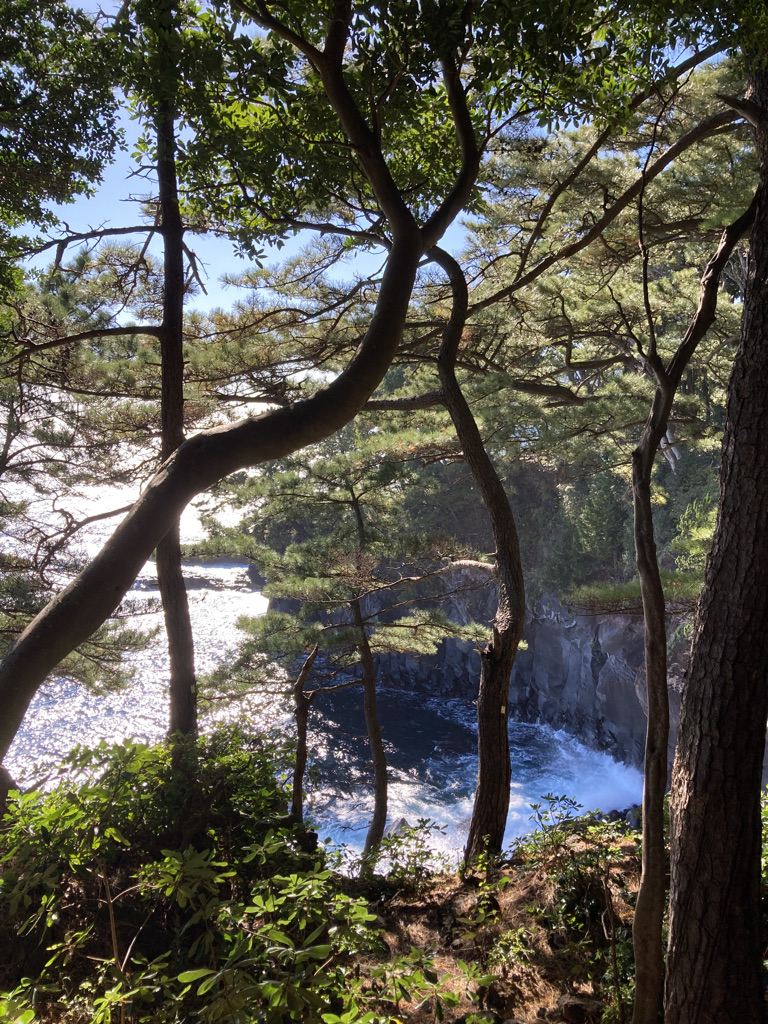
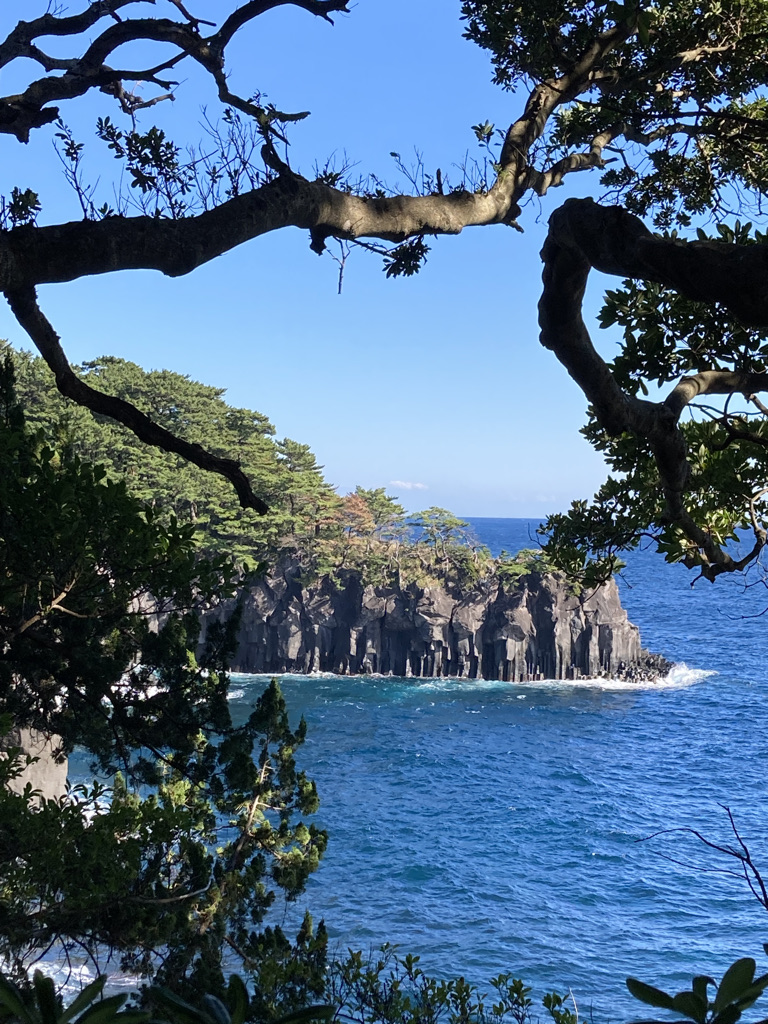
After the frenetic pace of Tokyo and the challenges of adjusting to the jet lag, the visit to Izu kogen took our senses to a different realm. Less than 2 hours on the bullet train from Tokyo there is the Idi Peninsula, a place shaped by the ever-present power of nature. Around 4000 years ago the eruption of Mount Omuro sculpted the peninsula in towers of rock lava, while blessing the land with hot springs and a diverse landscape. Our destination is the luxury Ryokan, Hanafubiki, nestled in a woodland grove. While waiting for the room to be ready we thread through the riverside, amongst bird singing and bathing in the autumn colours, at the end of which we find a most dramatic coastline. Framed with imposing pine trees the rocks are sculptures of lava, temples, and shrines carved by the volcano. The sea is a deep teal hue which contrasts with the cerulean of the sky. It’s both breathtaking and terrifying.
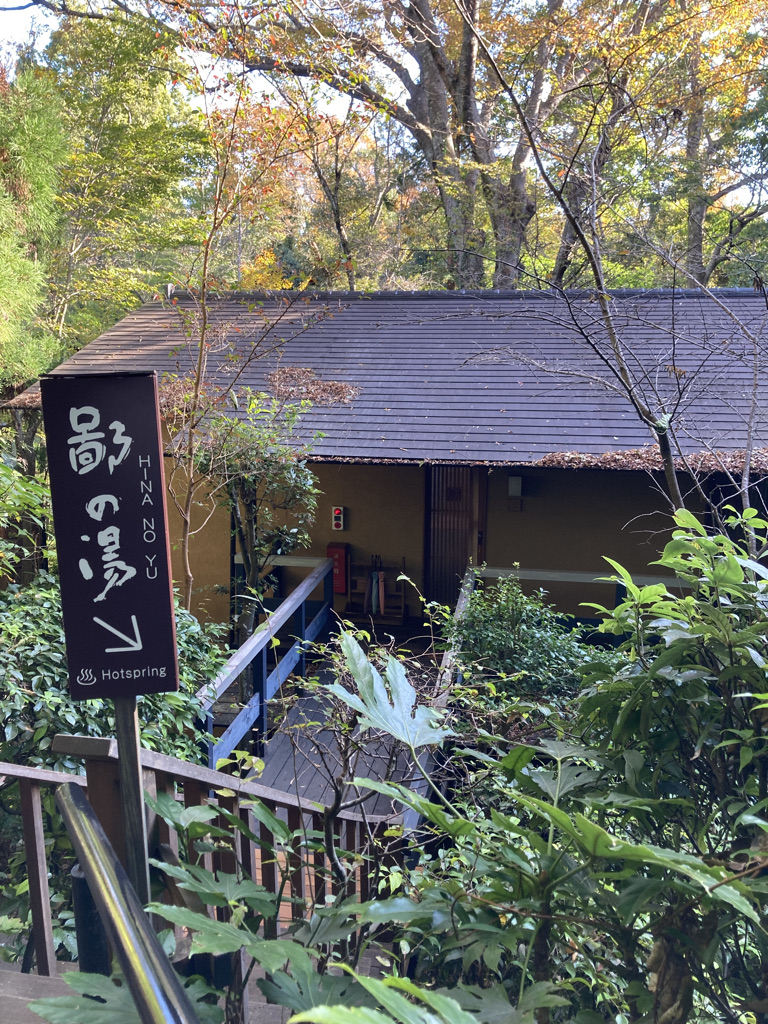
Beauty and terror are linked in Japan: the beautiful landscapes are a source of anxiety and fear: angry volcanos, capricious earthquakes, destructive typhoons, and transforming tsunamis. In this pleasant landscape also lurks terror and danger. Indeed, there is a feeling of helplessness, of being under the power of nature, and aware of her whims. Perhaps the aesthetic spirit of Japanese culture is a response to this constant terror and it may not be a coincidence that in this place we get to experience some Of the most exquisite sensations of Japan, in the architecture, their food, and their aesthetic. The ryokan is settled on a garden path where small dwellings mushrooms amongst the bamboo groves. The dwellings are as described in Junichiro Tanizaki’s book In Praise of the Shadow, about Japanese architecture. The muted earthy tones, the purity of the spaces, the lack of decoration and artifice, the minimal aesthetic emphasizing only the symbolic and the essential. Indeed, we are barefoot on the elevated space, the tatamis soft on our feet, the sliding doors, and expansive windows to the garden. Indeed… where is the bed? Our concierge smiles and suggests we just flow with the choreography of their hospitality. First, we shall be going to the hot springs and enjoying communing with nature. Although the onsens (public baths or hot springs) are normally public, in this ryokan we have private pools open to a sparse garden and the trickling of water… it’s simply heaven.
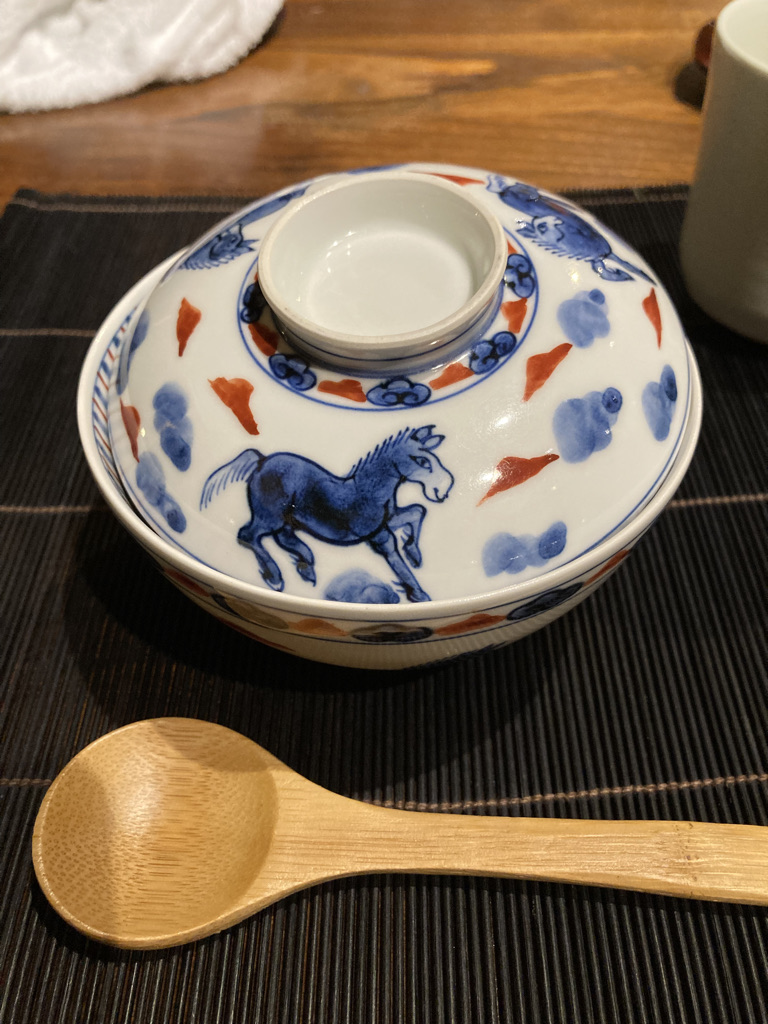
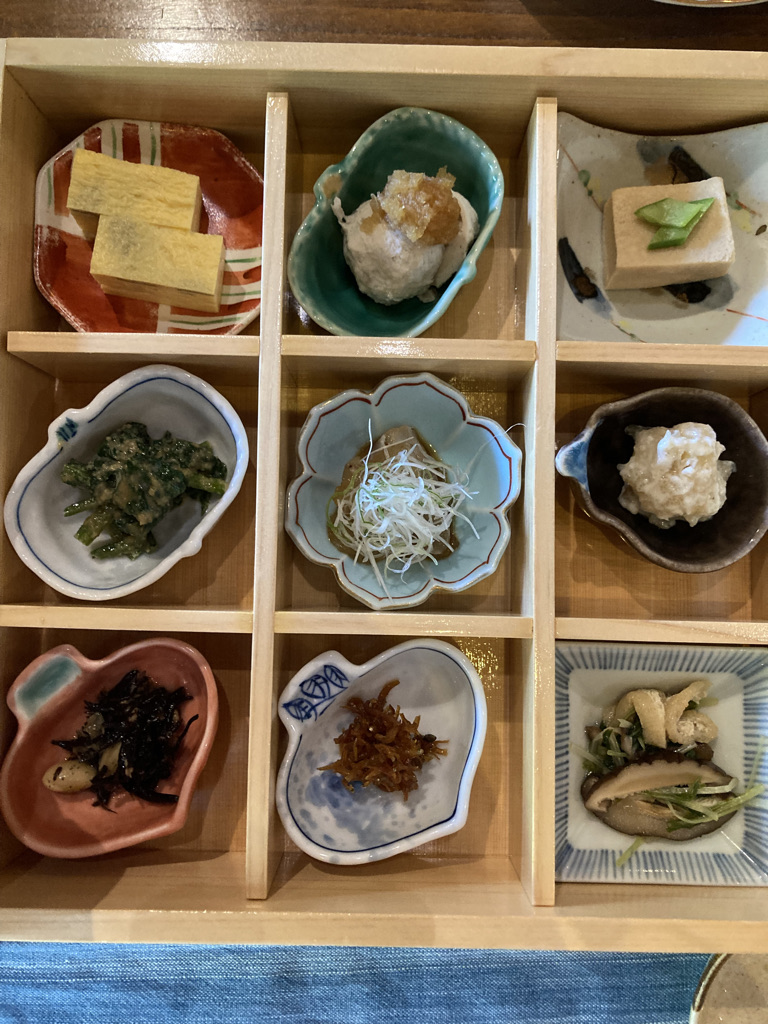
This ritual of purification leads us to the experience of kaiseki: Japanese haute cuisine. Still wrapped on our kimonos provided by the ryokan, we seem to be ready for this experience of sensuality and pleasure. It is a set menu of many little dishes, displaying different cooking techniques of contrasting textures, flavours and eye catching compositions. The food is exquisitely showcased in different ceramic and lacquerware, Ami no each dish a work of art. We start with a local squid, cod roe, sweet progre topes with grilled sesame miso sauce. The appetiser is a mini tableaux of shimeji mushrooms and chrysanthemum petals, dressed with tofu sauce and pine nuts. A lightly grilled barracuda pressed sushi’s oven baked local minced chicken meat flavoured with miso topped with poppy seeds, with mukago potato and ginkgo leaf shaped sweet pototo. Local shrimp flavoured with Chinese lychee served in hollow yuzo citrus half, and deep fried fungi fish meat with Japanese pepper…. And so on… a parade of shashimi, cooked dish, cold dish, grilled fish, rice, soup and pickles (see menu picture).
Each dish is welcome by exclamations and moans of pleasure at the discovery of a texture, a new flavour, a note of contrast or the visual pleasure of the plate. After a parade of exquisite food, we crawl back to our room, getting inebriated with the fragrance of nocturnal blossoms. When we open the door the space has transformed into a dormitory: two comfortable futons lie on the tatami, With exquisitely decorated golden duvets, low lighting, and the privacy of paper screens. Is it possible to reach a more exquisite, refined level of aesthetic pleasure? Perhaps in this ever-changing and terrifying world, the Japanese formula lies in loving every moment as a ritual of beauty.


 Bonito Living
Leave a comment