At the end of a long avenue in the area of Suginami in Tokyo, just before the blue bridge that divides de districts, there is a place where miracles happen. It’s not a temple or a shrine, neither is a hospital or a church. In fact is a Kintsugi Workshop, a place for healing and reparation. Kintsugi means “put things together with gold” and it’s the traditional Japanese art of repairing broken objects made of ceramics and porcelain. But instead of “making it like new” the idea is to emphasize the scars with gold and exquisite decorations.
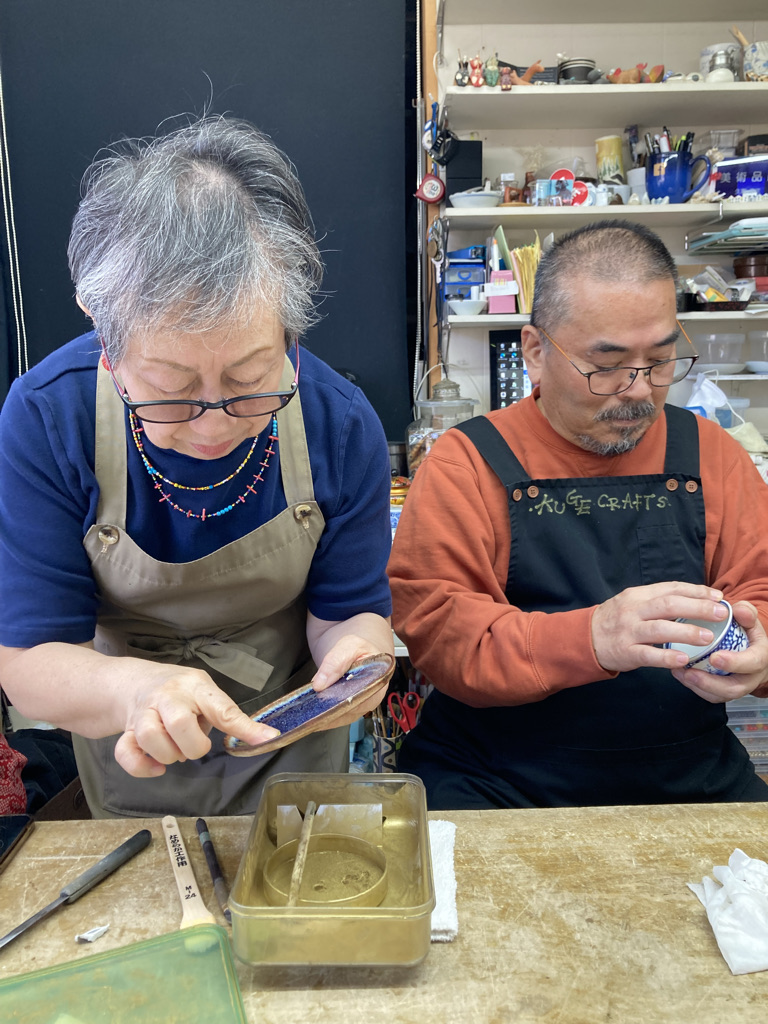
The tradition dates back to the 14th century and it’s a perfect example of the Japanese philosophy of wabi-sabi, celebrating the imperfect, the transience, and the fragility and resilience of life. As part of this encounter with the Japanese culture, we booked some experiences and activities, being Kintsugi one of them. Our instructors Yoshiichiro and Yoshiko Kuge welcome us to this magical place, where repairing a broken plate or dented cup can be an exercise of meditation, healing, and compassion. The whole place exudes creativity: colorful books nicely piled on the shelves, alongside dozens of objects, cups, and antique bric a-brac.
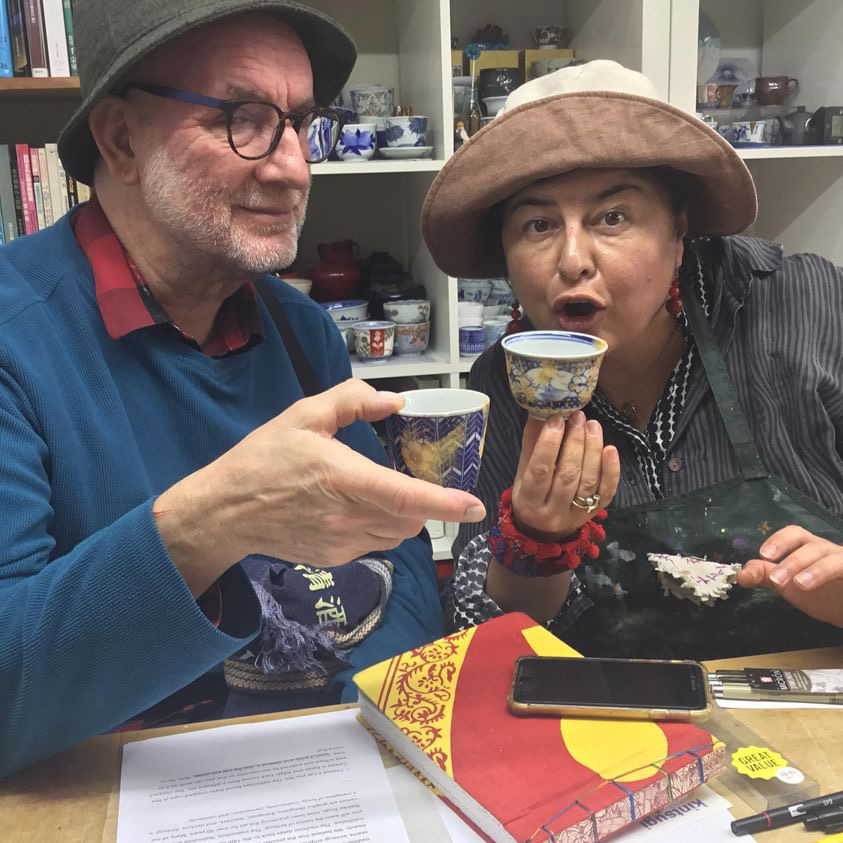
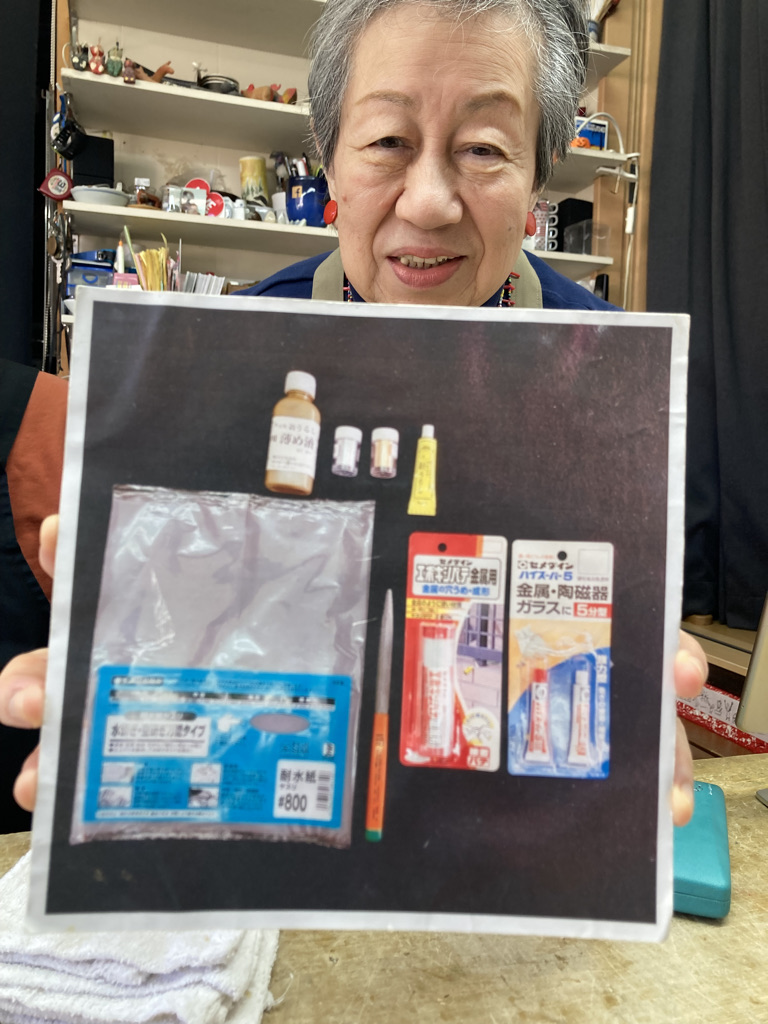
After a few introductions, we are invited to choose a cup or an object to repair. With us an American woman is living in Tokyo who brought a ceramic plate she brought from home, which is now broken. Three neat pieces. Also, there is a lovely Japanese girl who has been studying kintsugi for the last five years under Yoshiiro and Yoshiko’s generous training. We are offered the chance to choose some small bowls from their ample collection of blue pottery from the Edo period and take some time to touch, look at, and appreciate the beauty and the scars of these domestic yet precious objects. We start by mixing a type of epoxy resin that will cover the dent.
After 10 or 15 minutes it has solidified to the point we can start filing the poxy lump to harmonize it with the cup rim. This so when meditation happens. The filing must go in one direction, slowly but firmly. What do we need to heal? I wonder… In the old times, the Sufies had instated “Love Tribunals” where the incumbents could bring their broken hearts and have a good moan at their sorrows. But how do we mend our traumas and emotions in our modern times? Our overmedicated culture only offers drugs to “erase all Emotions”. This is perhaps a suitable solution but the price is the disappearance of what makes us who we are. It feels to me that we can work around our pains and wounds and mold them back into the bowl of life.
The instructor encourages us to touch as we see better with our fingers. The textures and shapes of our emotions are rarely smooth, mostly coarse, sometimes liquid, metallic, or woody. Now it’s time to apply the golden mixture and I think about what my friend Diana told me about the reconstruction of Tokyo: after the war, the city had the opportunity to rebuild itself.
The Japanese decided that instead d of making it back as it was before, as the intricate reconstruction of Warsaw, they decided to cover it in urban gold: glass and metal of modern architecture. While the old aspects of the city were kept, they were surrounded by shiny new buildings and technology. Yoshiko brings me back to my task, and it is to embellish the old utensil with the gold mixture. Soon little speckles of flowed and birds started to appear under the diligent hand of our tutor. I can only add some little stars and dots, gathering all my patience and concentration.
For the final part of the process, Yoshihiro opens some lacquered boxes with gold dust that we shall sprinkle around the bowl. It seems an extravagance but she shakes the brush full of golden dust all across the cup. Usually, the process takes two weeks to dry and solidify, and we shall pick the bowls after our pilgrimage. Then we will be able to use our resurrected cup, golden and enriched with the beauty of imperfection.



 Bonito Living
Leave a comment