There are travels and journeys
There are travels that start well before stepping on a place. Places that we dream or imagine through books, stories, fairy tales igniting curiosity and a desire to experience in our own body, the words, images or teachings read or learned through such stories. This journey to see the Northern Lights / Aurora Boreal started many years ago: through the chronicles of Narnia by CS Lewis, where an Ice Queen can cover the whole world with her frozen cape; or the adventures of Lyra in the book by P. Pullman The Northern Lights, and her own transformation with her daemon Pan, her encounters with the mighty Bear Iorek Byrnison, and the opportunity to understand that there are more than one reality. There are stories and dreams and those are the starting of this adventure in the Arctic.
We decided to take a boat, a Cruise aptly named “Spirit of Adventure” that would take us from the port of Southampton through the North Sea to get to the coast of Norway. Cruises and boats have a magical quality, that goes so much against the current world of “speed”, “velocity” and “instant gratification”. Instead they evoke adventures, treasure islands, Phileas Fogg in his travels around in the world in 80 days, and fierce Vikings, and indeed the whole story of humans: from the Phoenicians to Cristobal Columbus and his encounter with the Americas.
Sailing takes longer, it is true, but crossing the seas in what is effectively a “floating city” (with its own government and depending on the Captain orders!), and it can be as romantic and reliable as any other form of transportation. Of course, you have first to grow your “sea legs”, as the rocking of the Ship can alter any strong stomach. I try to think that this is a purification, a cleansing… and luckily after a while you get the rhythm, and even in choppy waters you understand that nothing can be done but surrender to the adventure. (If you want to learn more about Life at Sea, click here). This applies to the “itinerary” and the “plan”… many times the Sea dictates your journey, and unplanned excursions can become the most amazing experiences. Sailing and waking up with the different places is magical, and it makes you see the world in a different manner.
The itinerary
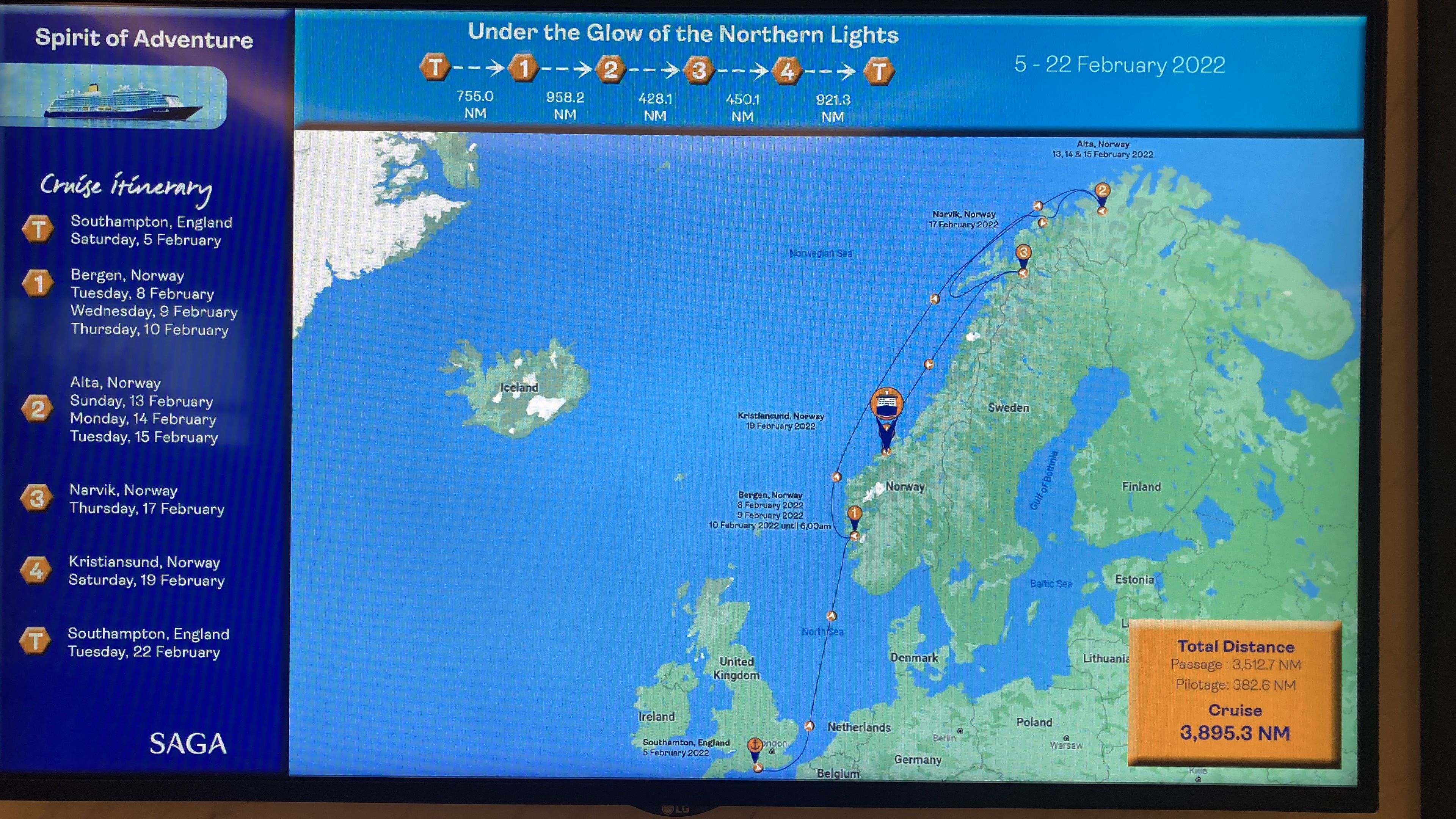
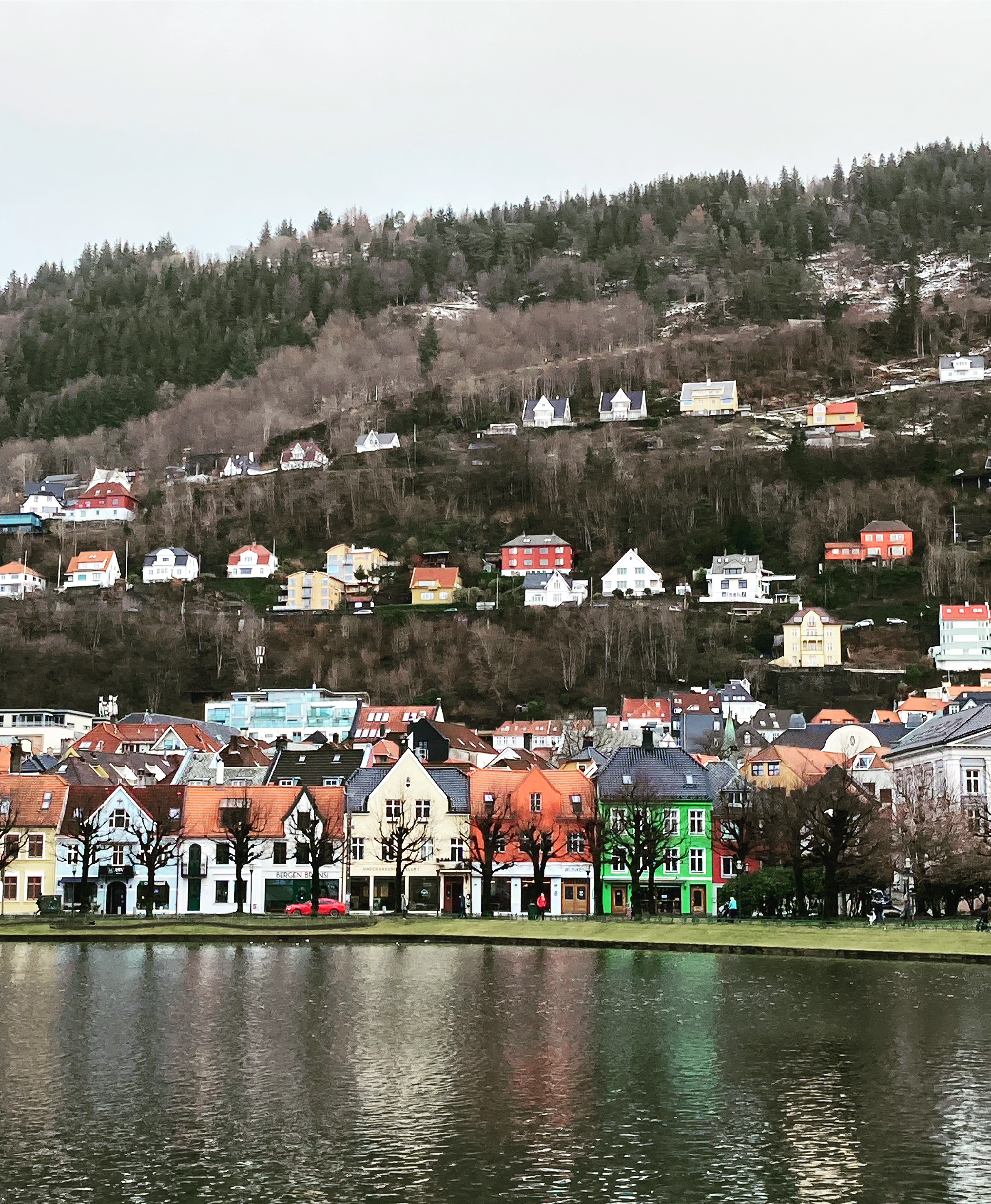
The first stop is in the city of Bergen, a medieval town and the gate for the treasures of the fjords and the immense richness of the Norwegian seas. Created as a enclave for the Hanseatic League – a sort of corporation of commercial interests well before the origin of nations- Bergen is made of colorful houses, labyrinthine streets and trade. Today it is a university city, and students from all over the world come to study marine biology and economy, and even in this rainy day it bursts with activity. The truth is that Bergen, as many other coastal cities, can experience the four seasons in one hour: snow a moment, rain, then a shining sun and a cold wind, all together.
We walked through the streets and discovered some crows.. they look familiar, but, hold on a second: they have white spots and a curious grey hood… Ah… later we find out that they are called “hooded crow” and it is a relative of the elegant corvids we have in England.
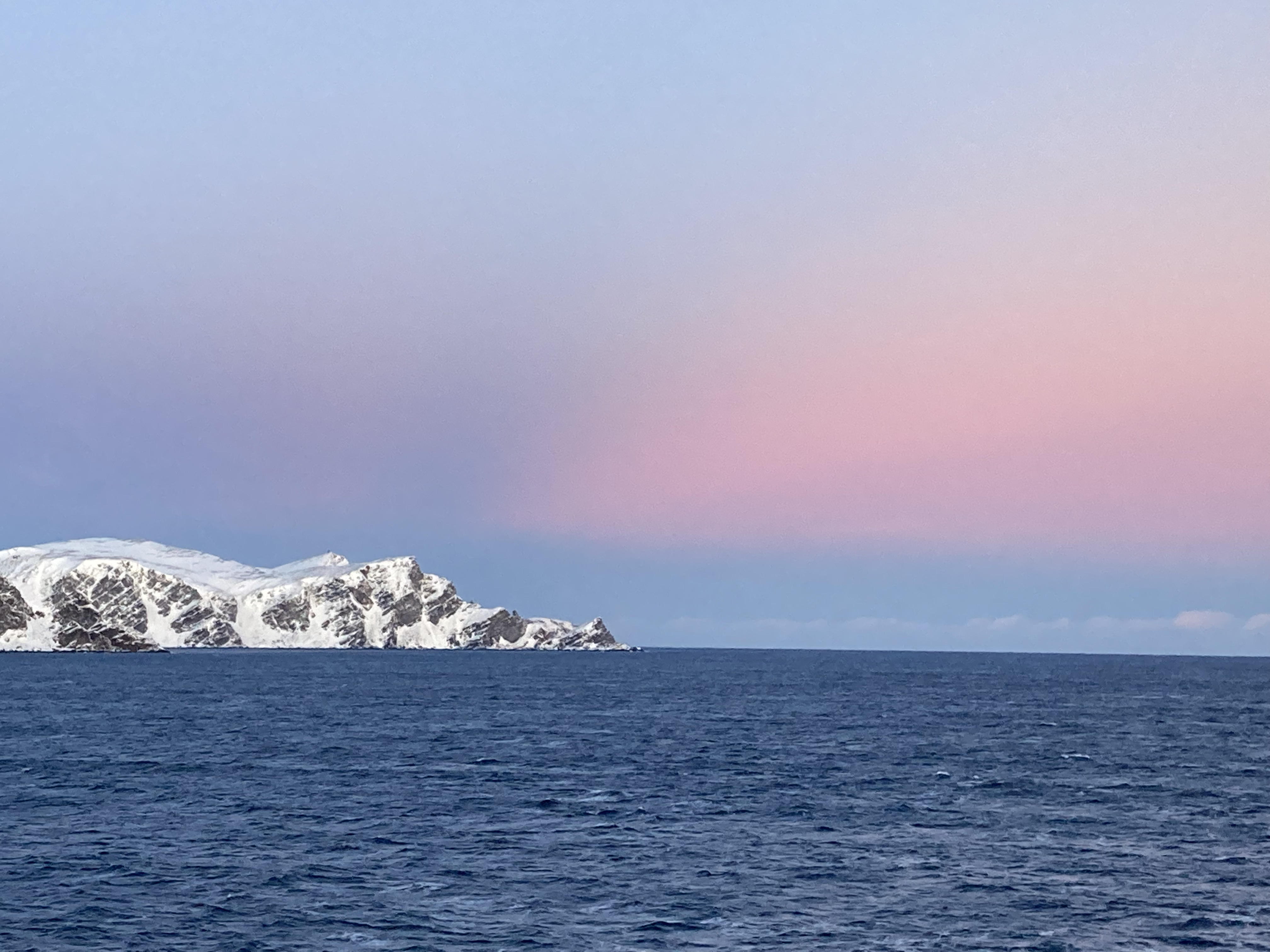
We were scheduled to go to Tromsø in the north, but Poseidon (the Greek god of the sea) is not in the mood and storms are announced. The captain decides then to stay one more day in Bergen, and we organised an excursion to the Fjörds. The Fjörds are geological formations of ancient rock, carved by the water, and they are dotted across the Norwegian coast. If you look at the map, there is not a straight line, but a sort of “lace” made of water, rock, mountains and ice.
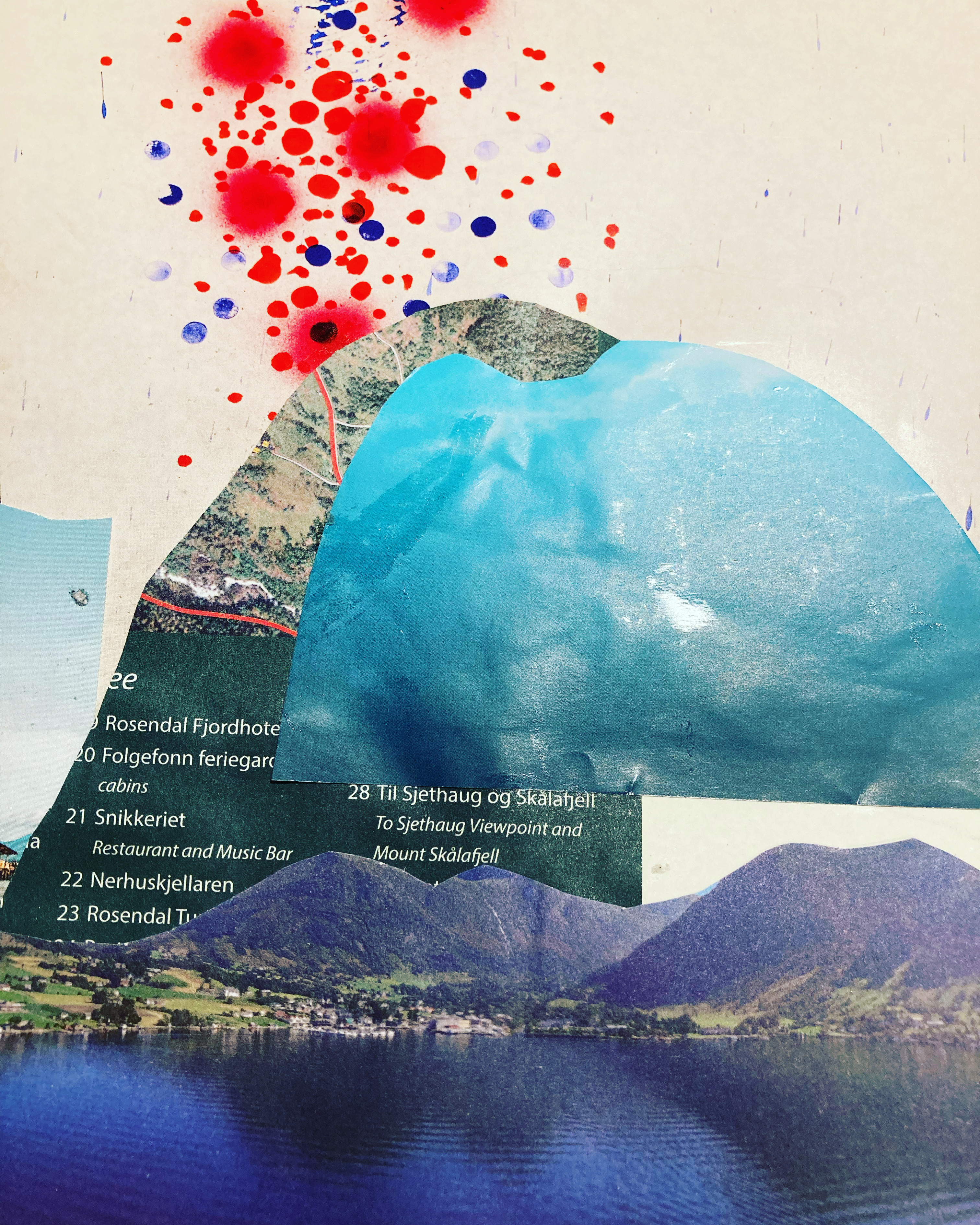
It is so exciting, these gigantic rocks have all sort of shapes: sharpen and menacing, or round and chubby, extensive or small, but each of them with a distinctive characteristic. Here is when you can well “see” the shapes of gods and giants and all the creatures described in the Norse Myths.
The journey starts before traveling
As we normally do when we decide on a journey, we prepare ourselves in advance. What does this mean? Well, the journey starts when we choose a place, book the tickets, and finishes much more later than arriving home. It includes finding out about the places to visit, their history, their culture. It involves reading books, listening to music and looking at maps. This preparation also is a way to enjoy the journey and honour the spirits of the plce. It is not enough to “get there”… no, you need to ask for permission, be grateful about the opportunity to visit these landscapes, and also get familiar with the stories.
They may be fairy tales or folk tales, but just in case, we prepared ourselves with books of stories about the Norse Myths. I started with Neil Gaiman’s book on Norse Mythology. He is a brilliant writer, maybe you have read or watched “Coraline”? Well, he is our man. A friend of mine also recommended me the Norse Myths by Kevin Crossley-Holland with the magnificent illustrations by Alan Love. Both books introduced us to the stories of the Gods: One-eye Odin, his brother Loki – a mischievous trickster-; the powerful Thor; and the magical Freya. They are so part of our life, that our days are called in their honor: Tyr for Tuesday, Odin is Wednesday, Thor is Thursday and Freya, Friday! Our ways of seeing the world have their roots in these myths, and getting close to the Arctic, it is possible to imagine the kingdoms of gods -Asgard, and humans -Midgaard, and the presence of Giants, the industry of dwarfs and the magic of elves and trolls. The fact that we don’t see them, does not mean they do not exist! Later, knowing this stories will open the doors for experiencing magical phenomenon of the Aurora Borealis aka the Northern Lights.
The Aurora Borealis
The Aurora Borealis is a meteorological phenomenon visible in the parts of the earth near the Poles. It is about the reflection of the Sun storms that pass through the solar system. However, when they get to Planet Earth they find our electromagnetic field and instead of crossing through the planet, they get refracted in the poles. They are basically “lights” a sort of clouds that move differently in the sky. Normally they are pictured as green or pink lights by the cameras and photos, but for the naked eye they are lights a bit different from the normal wispy clouds. Some friends in Scotland and in North Maine (near Canada) in the United States have seen them, and they can tell different stories of their own experience of the lights. For us, it was a magical sighting, the impulse of the journey and the reward. We were aware that it is not “guaranteed” to see them, but we had the fortune of experiencing them while sailing, and even more magically in our own cabin balcony, in the most amazing full moon.
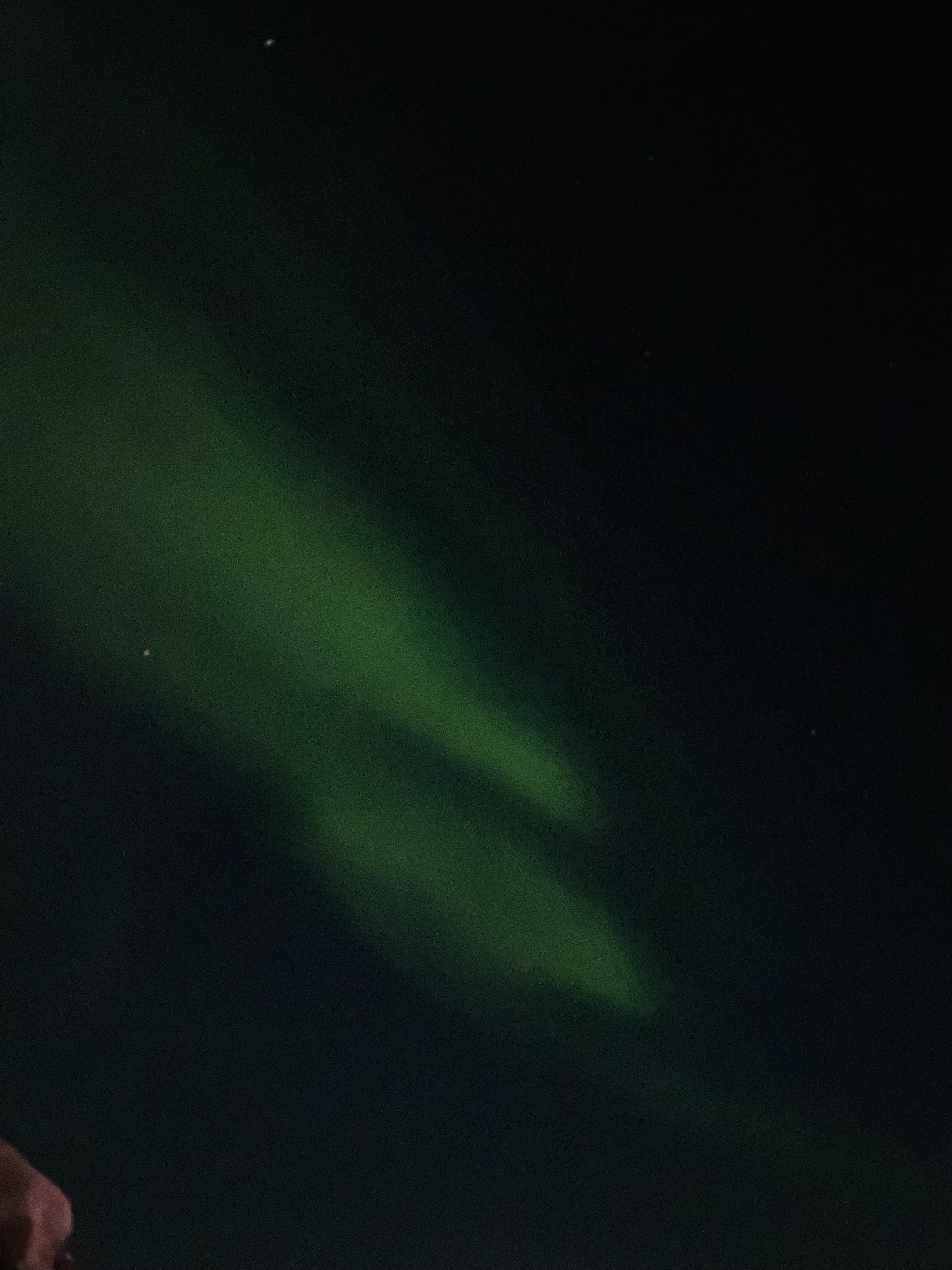
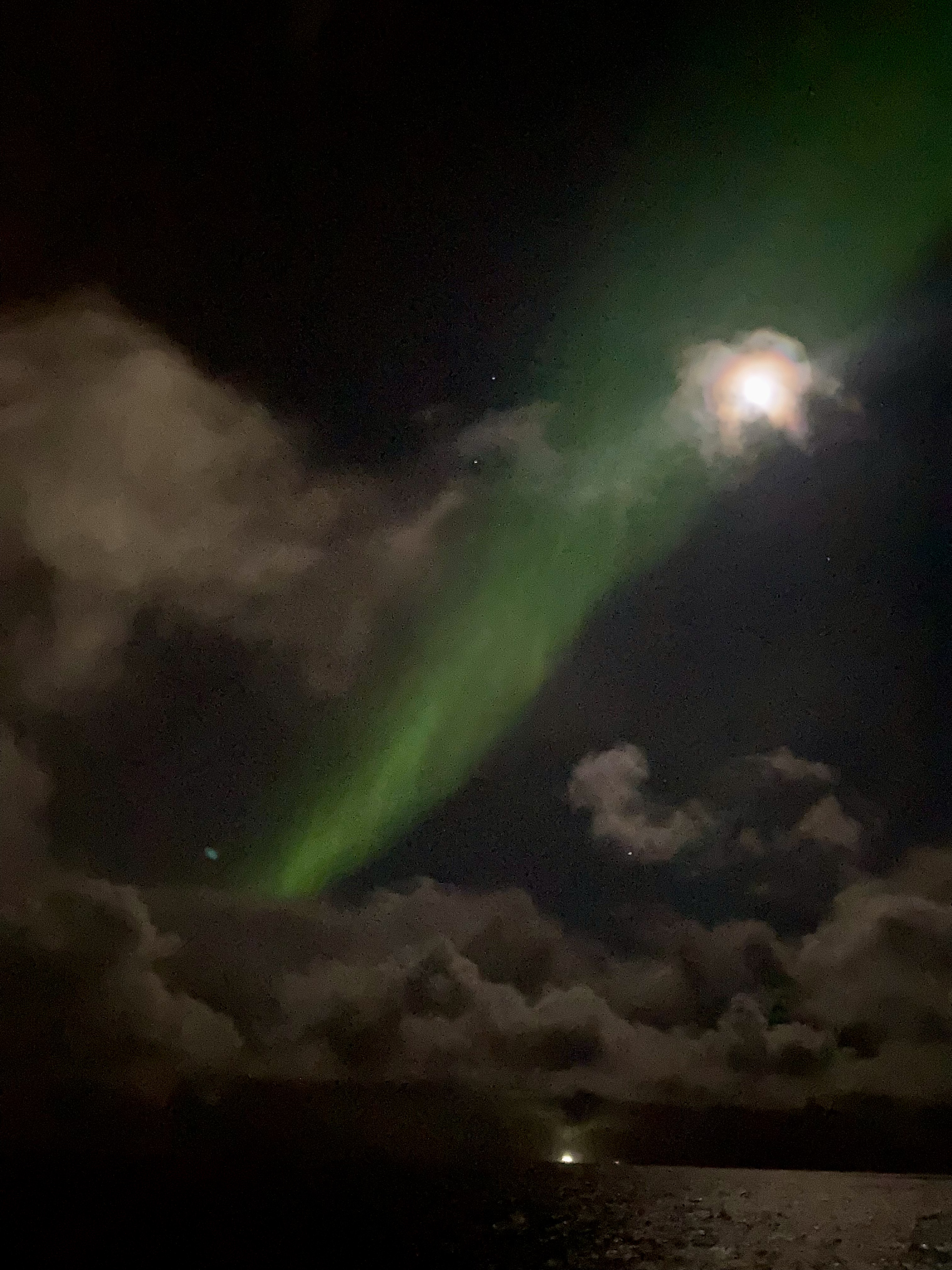
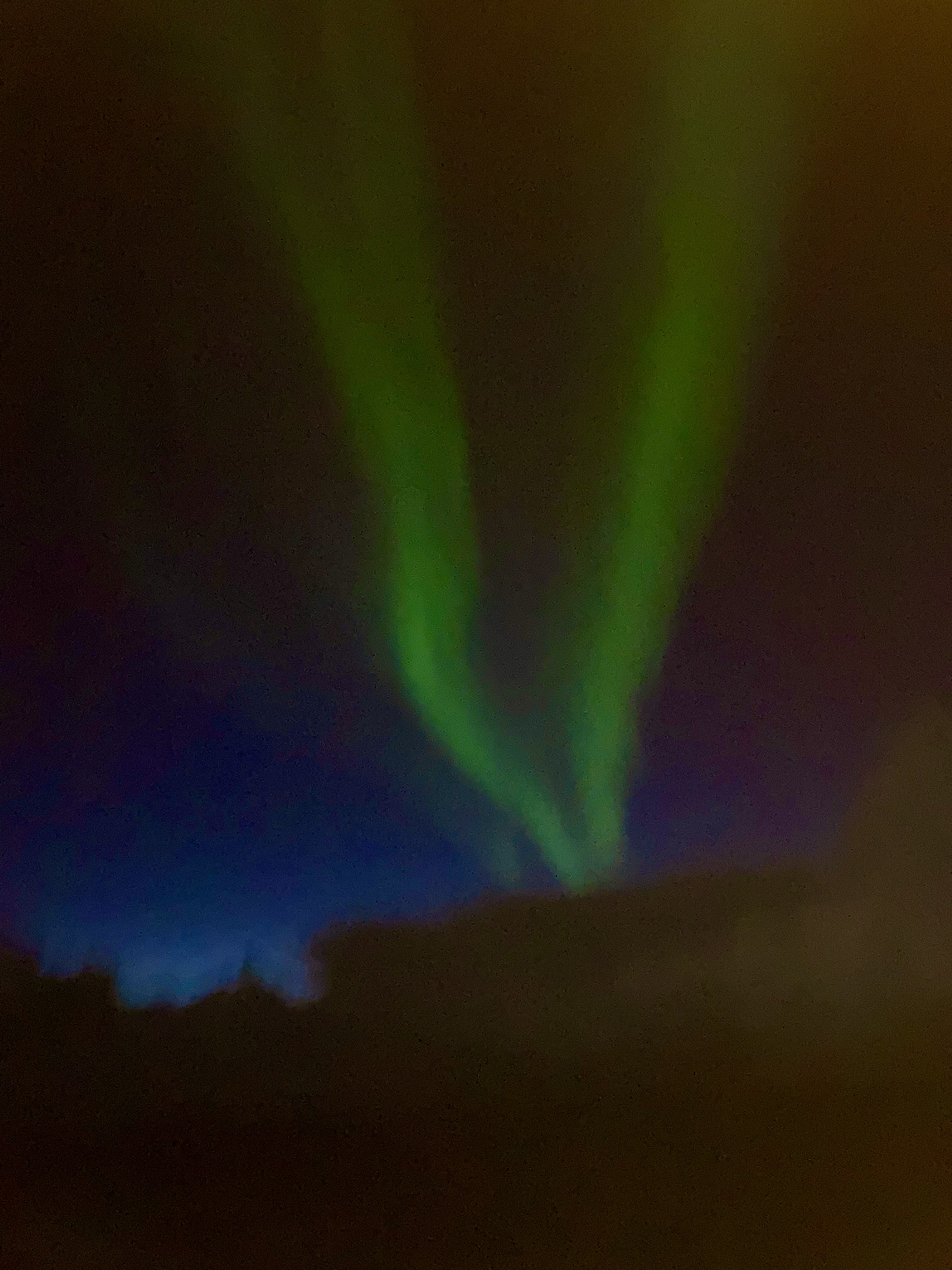
The northernmost you go in the planet, the more possibilities to see the Northern Lights, and hence, the main destiny in this cruise was the city of Alta, the Northernmost city in the European Continent. The city was founded in 2000 and it combine two old cities, and the Sami communities that have inhabited the land with their wisdom and their relationship with Nature. At first, Alta does not look very attractive… but appearances can deceive. In fact, this place appropriately branded as “the capital of the northern lights”’is a portal for those imaginary worlds of literature and tales.
It was in a camp in Alta where we experienced the expansion and the encounter with the gods of the place. All the preparation before traveling through reading and learning about the culture of the Nordic countries helped us to enhance the experience. It was a magical night, going through landscapes of rock and frozen lakes, encountering wolves and traveling back in time to share stories around the fire. It was there where we realised the connection between the Aurora Borealis and the Norse mythology. Click here to learn about the Dancing Gods and the Aurora Borealis.
The Arctic slowly reveals its treasures
Like Bergen, Alta is a student city and many international students fall in love with the possibilities of space, time and a way of life that albeit hard allows the spirit to grow. There are also many Norwegian students experiencing their Folkehøgskole year. It is like a “gap year” but instead of traveling abroad young people have the opportunity to learn new skills or work on something they are passionate about: from dog breeding, to how to build a wood cabin, or mechanics and cookery lessons. The Norwegians have a slightly different educational system: younger children attend schools but there are no grades, and no assignments. They learn without the pressure of tests and exams, and most importantly they learn the value of cooperation rather than competition! I think we can learn a thing or two from them… I personally dislike assignments it distracts me from the pleasure of learning.
But going north means going colder weather and we need to get prepared if we want to defy the temperatures of almost minus 10 to minus 15 grades Celsius. Norwegians say that there is not such a thing as bad weather but bad clothing and we adopt their advice of dress like an onion. What does this mean? Well, if you see an onion it has something very particular: layers. So we start with a warm undergarments, another layer of cashmere, another layer of a fleece or a very warm jacket. That applies to downstairs with almost two or three layers of trousers, warm leggings and double socks. A woolly hat and warm gloves and you are ready! Of course you look like an advertising for Micheline tyres, but that’s another matter. The important thing is to keep warm and protected at all times.
And we needed such protective layers. Because the next few days are snowy and the storms transform the landscape into a big white painting. The ice sparks like diamonds and the morning of our first excursion looks quite gloomy. Snow flying around and a howling wind. The climate did not promise a good day even though we were looking forward to the dog sledges, it looked rather ominous. But the truth is that the dogs-sledging excursion was one of the main inspirations to come, as grannie Mau had come some years ago and the picture of her smiley and defiant with her white hair covered in blue and pink stripes, wrapped up in the sledge remains in our memory.
Dogs, sledges and the vast snow
Dog sledging is one of the most ancient relationships between humans and animals, it is part of the survival in this climate. It is also about living with nature and leading with compassion and team work, it’s about learning the language of dogs, of trees and clouds. It’s learning with nature. The “mushers” -dog guides and sledge drivers- in this camp are mostly young women, passionate about dogs and the real women who run with the wolves as in the famous book by Clarissa Pinkele Estes. Around the fire we are told stories of storms and long races under the silver moon, with no more company than your dogs.
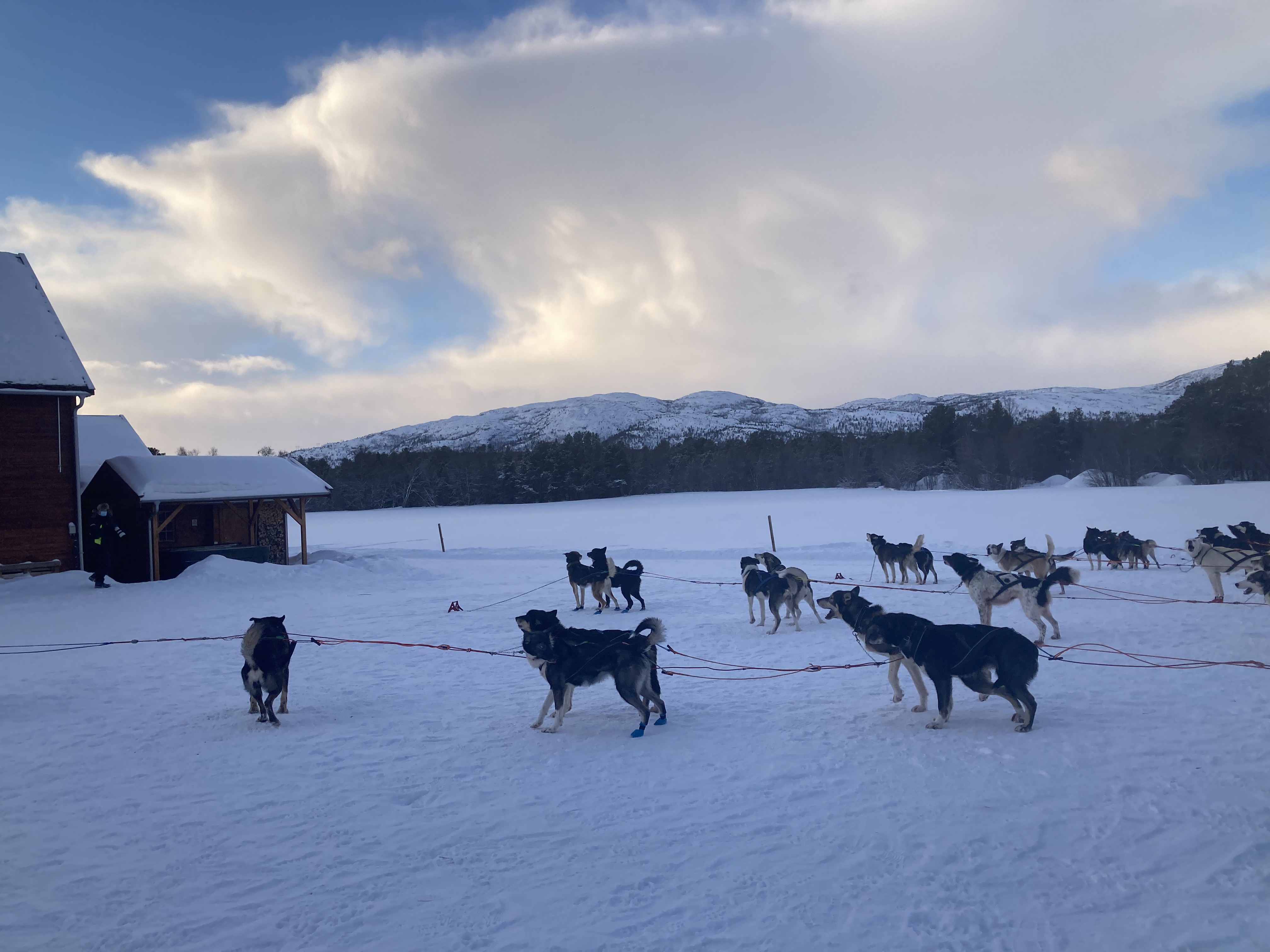
A team of dogs in a sledge are made of six or seven dogs: two leaders in front, intelligent and leading the pack; an experienced dog coordinating the whole rhythm, and two or four soldiers carrying the sledge. Covered with a reindeer skin and with no more technology than wood and metal, the experience of sledging is difficult to describe. The sound of the metal in the snow, the rhythm of the dogs knowing every path, the drops of snow peppering your face, and the sensation of freedom, of being one with the landscape, the dogs, the universe! It’s so exciting! In our own sliding through the snow I feel the wind and the elements around me, I am one with the landscape, and my trust on the musher and the dogs is the only anchor to reality. Speeding through the snow with no more protection than a reindeer skin I think about Mau, and her pink and blue hair seems to be floating in the air laughing.
More about Women sliding with the wolves here
Norwegian Wood
For many Latin-Americans, our portal to understand the British (and European) culture has been through music, especially through the Beatles. One of their songs Norwegian Wood transforms that stripe in the European map into a sentiment of longing and nostalgia. Is this journey a dream? is this real? For me, the experience of the Norwegian Arctic belongs to the realm of dreams, and yet I was there, I felt the cold, the snow, the light and the magic of the Aurora. Somehow it was more than a travel, or holidays… it was not about visiting places, getting a tan, buying souvenirs. Instead, I felt this was part of a wider spiritual journey as a human being: I’ve had a glimpse at alternative ways of living, at the expanse of the landscape, and the potential of humans to live and cooperate in peace with nature and amongst ourselves. The big distances, the large landscapes covered in snow, the experience of the cold climate, instead of being overwhelming, made me feel open and expansive, a human living with nature. Perhaps is the extremes of this geography: the darkness of the polar night, that from some weeks in November to December, only let you see a glimpse of the sun never over the horizon for a couple of hours or so. But that same night is necessary for the Northern Lights. The implacable climate of rain, snow, ice repeat can weaken any spirit. On the other hand, the spring arrives with as many colors as possible, packing in few months all the diversity of life, and then you have the midnight sun, that during the summer extends the day and get a twilight at midnight. Norway is a relatively young nation, and instead of celebrating heroes and wars they celebrate about theater, opera and music. It is an example of democracy and their approach to education is inspiring.
If you want to know more about life in Norway, click here.
We’ve only just begun
Oh yes, there is much more. We visited amazing places, like the Ice Hotel, an igloo built from November to march in which everything is made of ice: beds, bedside tables, seats, dinner tables. It is possible to spend the night in one of the rooms, where a ‘water bed’ covered with a reindeer skin invites you to sleep, providing you have a pillow and a warm sleeping bag. However, try not to drink so much because going to the bathroom… is complicated!
I could write about the many other places we visited: the majestic mountains in Narvik and the Polar Wildlife Park, with bears, arctic foxes and wolves, or the fishing stories of the Kristiansund…. And they all come back to the experience of traveling, talking to people about their ways of living and doing things, experiencing new landscapes, sensations, emotions, and discovering that the world is wide and wonderful!
Because traveling is perhaps the best investment, it is a way to opening portals to different realities, cultures, geographies and sensations. It opens your soul and elevates your spirit. It is more than traveling, it is a journey, of the spirit, of your humanity and it makes you feel connected with all the brothers and sisters that are the humans who share the privilege of living in this amazing planet.
 Bonito Living
Leave a comment